In the wet climate of Vancouver and the Lower Mainland, water damage is a common phenomenon. Circuit Clean provides prompt electronics water mitigation services to avert the consequences of flood, pipe burst, and humidity. When electronics are soaked or sprayed, every hour counts. Our facility in Vancouver is equipped with vacuum freeze-drying technology and desiccant chambers that remove moisture from the deepest levels of the circuit boards before any oxidation occurs.
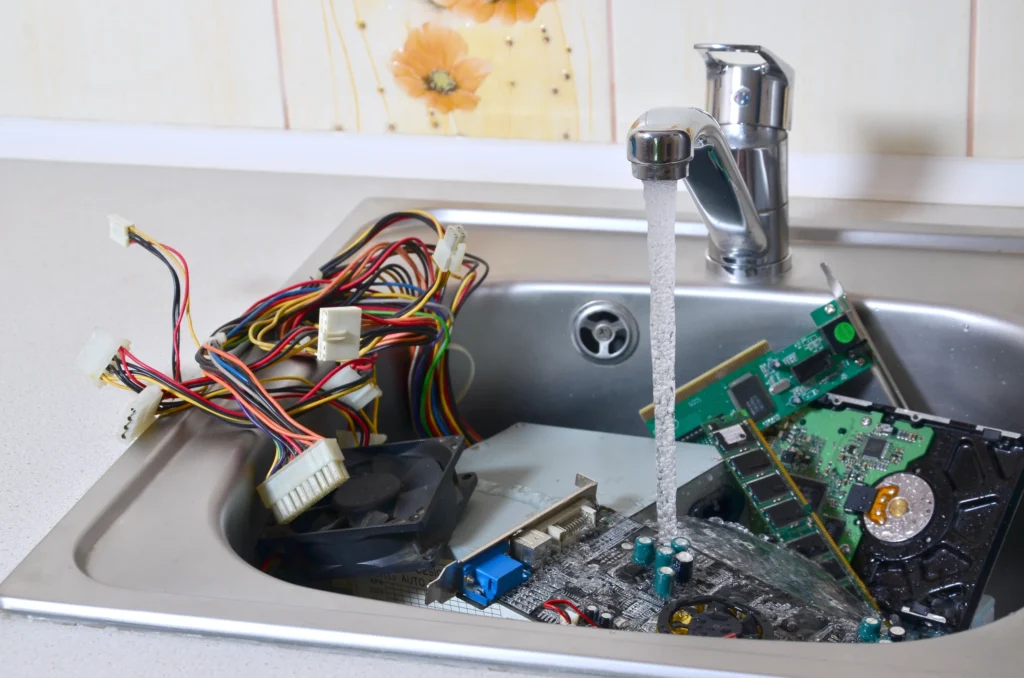
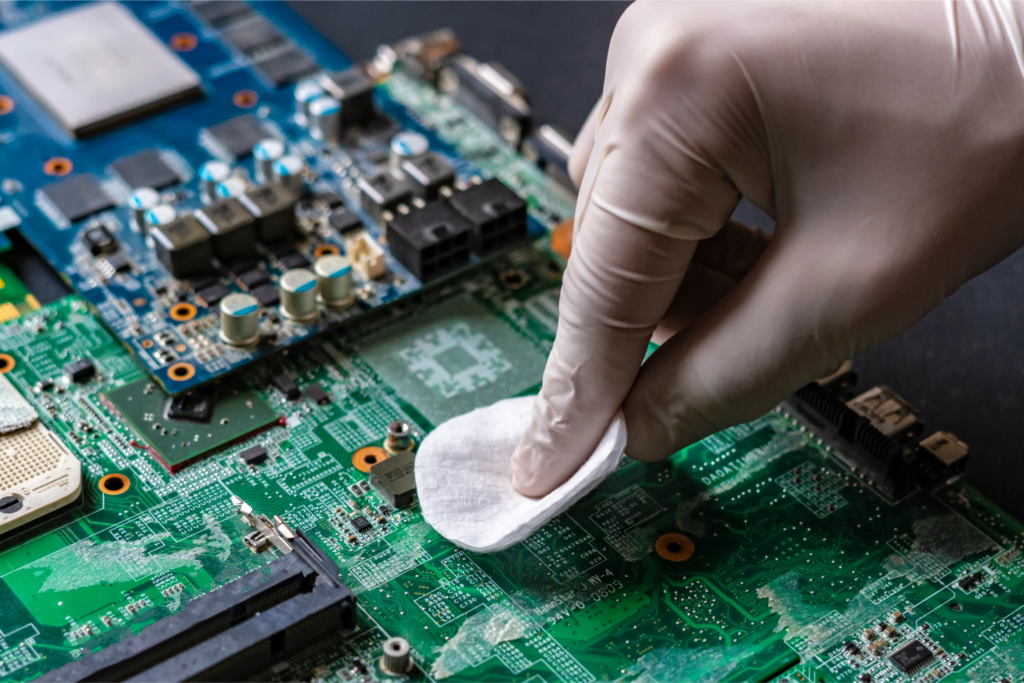
Our electronics water mitigation service is geared towards saving valuable items like smart appliances, gaming computers, and professional AV equipment. Our clients, who span from Surrey to the North Shore, require a total teardown of the damaged items to ensure that all moisture is removed. This attention to detail is what has gained us the reputation and trust of insurance adjusters throughout the Lower Mainland for our most intricate water damage cases.
Circuit Clean is the go-to provider of insurance-driven electronics restoration because we provide consistent and defensible results that directly correspond with the needs of the insurer.
Our process includes the following:
With the combination of technical expertise, turn-around times, and transparent reporting, Circuit Clean enables insurers to keep claim costs under control without having to worry about the integrity of the process. This creates a restoration expert that not only fixes electronics but fixes the process of restoration itself.
Get in contact today with us for any of your, or your clients electrical renovation projects.
A water-damaged TV could potentially be repaired; nonetheless, it will depend upon the extent of exposure to water as well as contaminants within the water itself. A TV that has been subjected to clean water for a short period of time and has promptly been disconnected from power has a good possibility of being able to be serviced. On the contrary, a TV that has been subjected to contaminated water (such as floodwater or sewage) or has been subjected for too long a period of time or has remained powered on when wet has a very low possibility of potentially being able to function properly. The determination of whether or not a water-damaged TV will need to be repaired or replaced usually depends upon contaminants.
In order to work on a circuit board that has developed a leak, it is essential to turn it off and unplug it from all electrical connections. The circuit board has to be worked on, and if it is wet, it has to be blot-dried to remove all visible water. This would be followed by a wash with isopropyl alcohol if contamination has resulted in corrosion. It has to be left in a warm and well-ventilated room for 24 to 72 hours before attempting to switch it back on.
It does not work effectively in the drying of wet electronics. It may work in the absorption of moisture from the surface of the wet electronics from the air. It does not remove moisture trapped between the electronics components. It does not work in the elimination of mineral deposits or chemicals that cause corrosion. It does not provide a method for the test of the electronics after the restoration for its functionality. It does not provide a restore or replace method that can be considered valid.
One should not consider it safe to simply reach out and operate a dripping, water-filled appliance without first addressing its water and electricity exposure. Even if it does not seem to be plugged into an electricity source, it is possible for water to make an appliance dangerous by creating hot spots, damaged insulation, and corrosion, all with the impact of grounding. It is further dangerous if the water was not plain and if the electricity to the appliance was not turned off at the power box.
Yes, if there is a water leak near an area with electronics or electrical appliances, the main breaker should be switched off for safety. Water and electricity are a significant shock and fire hazard, even if devices seem unplugged, as moisture may creep into outlets, wiring, and equipment. Turning off the main breaker minimizes the danger of electrocution and secondary damage until the leak is fixed. After the area has been dried and the source of the leak has been fixed, the affected electronics should be checked by a qualified professional before power is supplied.
Yes. Indeed, even a small leak behind the wall can result in a fire if it comes close to electrical wiring or connectors. In this case, the water can damage the insulation or cause corrosion and short circuits that produce heat instead of an immediate spark or explosion. Such damage can often be overlooked even if the area seems to be dry. Nonetheless, leaks in the area around electrical systems should be considered a significant problem and addressed by turning off the electricity and examining the wiring before it is restored.
Yes, even if your appliance merely got splashed rather than submerged, it is well worth having it inspected by a professional. Water may enter circuit boards or sensors in ways invisible to the naked eye, leading to corrosion or circuit damage even if your machine is functioning properly. This is particularly important if your machine is part of a claims investigation. Moreover, it is important to have it inspected if it is in any way related to safety or critical applications.
Ultrasonic cleaning is a restoration technique that involves the use of high-frequency sonic waves in a liquid solution to remove any contaminants from sensitive electronic parts. The sonic waves in the liquid solution produce microscopic bubbles that implode, thereby loosening soot, corrosion, mineral deposits, and other materials from the circuit boards and electronic parts. For a circuit board that has been damaged due to water, the ultrasonic cleaning process will help remove any moisture that is still present in the board, which will increase the effectiveness of the board being restored for use. The process is more effective than the drying process because it removes any hidden contaminants.
Fortunately, the white “crusty” corrosion that will be evident on the circuit board due to the leakage may be removable. Moreover, this may be done through professional cleaning. In this process, the circuit board will be exposed to a procedure referred to as decontamination. This can be performed by the use of solvents or ultrasonic cleaning. In this procedure, the mineral deposits will dissolve. At the end of the process, the circuit board will be dried.
Yes, deionized (DI) water is one of the methods utilized in the electronics restoration process at Circuit Clean to completely rinse out the contaminants from the circuit boards that have been damaged either by water or fire. This is because deionized water is mineral-free and pure; therefore, it rinses all the residue and no additional materials are introduced into the electronics to act as a conductor. After rinsing, the electronics are dried to enable the tests to confirm whether they are ready for reuse.
Adding electronics to “rice” is not useful and, in fact, damaging for professional-level electronics. Although rice will absorb surface-bound moisture, it will not remove moisture trapped beneath chips, in connectors, or in multi-layer circuit boards, where corrosion and electrical shorts begin. Rice will not remove mineral or chemically based residues from moisture, either. Water will continue to corrode electronics even if they seem dry. Professional electronics repair techniques include controlled drying, decontamination, and solvent or ultrasonic cleaning to ensure all moisture and contaminants have been removed and electronics have been sufficiently dried for safe power-up. Electronics submerged in rice may operate for a period of time before failing.
A megger test is a diagnostic test that determines the insulation resistance of electrical components, cables, and equipment by employing a high-voltage insulation resistance tester (also referred to as a “Megger”). This test ascertains if the insulation surrounding the conductors is sound and damaged due to water, fire, and contamination. In electrical restoration, it is imperative to perform this test as minute leaks, floods, and exposure to smoke can adversely affect insulation, leading to a danger of short-circuiting, arcing, and failure of electricity. Thus, upon completing a megger test, one is assured that it is safe to switch on the circuit.
Indeed, a water-damaged server rack can perhaps easily be salvaged without losing any information. However, the effectiveness of such a process depends on how soon care is taken to treat the water damage. Very critical areas of focus would be switching off the power source immediately, removing storage drives, as well as maintaining a controlled environment. A professional for electronics repair can help clean, dry, and check the boards of power as well as connections. The best possible way to retain information would thus remain through prompt recovery of storage drives as well as using specific equipment. Hardware components might need to be fixed or replaced; still, through proper care, information could easily be salvaged from the storage.
Yes, indeed, in most situations, repairing upmarket brands such as Wolf or Sub-Zero would be less costly than replacement. This is mainly due to the fact that these brands tend to be equipped with intricate electronic control systems that tend to be very expensive to replace. Furthermore, having the expertise to restore the appliance to a functioning state by decontaminating the affected components tends to be less costly than having to replace the entire appliance. In addition to that, appliance restoration ensures that the appliance that was intact is conserved.